Beaverbrook to Fernbank
Landscaping in Kanata, from garden-city lots to brand-new yards.
Kanata was planned as a garden city, and its yards still show it: mature trees on the oldest streets, rock close to the surface in the north, and fresh builder grading in the west and south. Each needs a different approach.
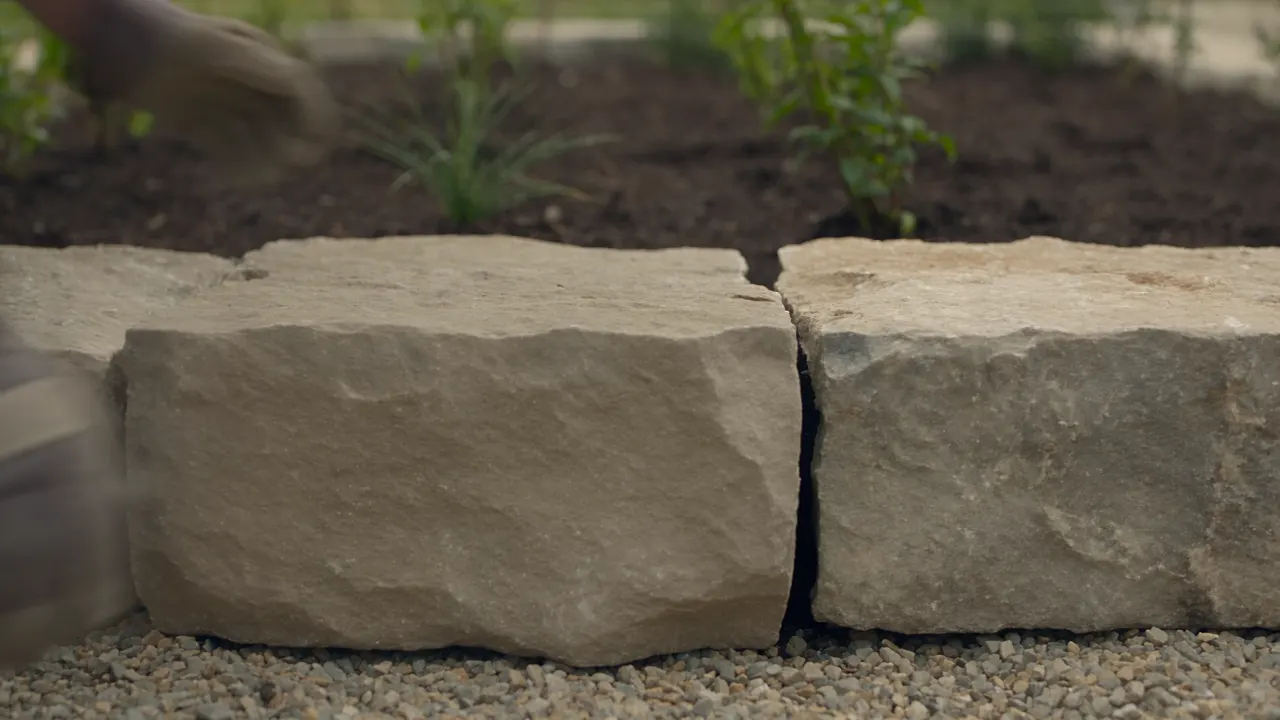 Stone for Kanata's slopes and rock
- Neighbourhoods
- Beaverbrook, Katimavik-Hazeldean, Glen Cairn, Bridlewood, Kanata Lakes, Morgan's Grant, Kanata West, Fernbank
- Common ground
- Shallow rock in the north, clay pockets, slopes and builder-grade lots
- Popular projects
- Interlock patios and walkways, retaining walls, new sod, privacy planting
- Before digging
- Locates, tree permits for big trees, rear-yard swales left open
A suburb planned around green space
Where Kanata came from
Before it was a suburb, Kanata was farmland and bush in March Township. In the 1960s the developer Bill Teron assembled more than 1,200 hectares and set out to build a garden city, with homes set among trees, pathways and open space rather than lined up on a grid. The first street, Tiffany Crescent in what is now Beaverbrook, was built in 1964.
Kanata became a city in its own right in 1978 and grew fast through the 1980s and 1990s, largely around the technology park Teron had reserved land for. By the time it joined the amalgamated City of Ottawa in 2001, it was home to about 59,700 people, and it has kept spreading west toward the Carp River and south into Fernbank since.
What that means for a garden today
The garden-city idea still shapes Kanata's yards. Beaverbrook and the oldest parts of Katimavik have big, mature trees, many of them now protected by the City's Tree Protection By-law, and gardens that have been growing for half a century. The newest neighbourhoods have the opposite: compact lots, thin topsoil over compacted fill and clay, and a sapling or two from the builder. Landscaping in Kanata means working with whichever end of that range your yard sits at.
Kanata, neighbourhood by neighbourhood
The age of a neighbourhood tells you a lot about what is in the ground and what the yard needs.
Rock, clay and slope
Kanata's ground varies more than most of Ottawa, sometimes within a single street.
When the shovel hits rock
The South March Highlands, on Kanata's northern edge, are an outcrop of the Canadian Shield, and in parts of Kanata North the bedrock sits close under the lawn. Shallow rock is not a problem for a patio base, which can be built up rather than dug down, but it does change drainage, because water cannot soak into rock and moves sideways instead. It also limits where trees can be planted; a tree that cannot root deeply is a tree that blows over. A site visit with a probe bar answers these questions before the design is finished.
Clay and new-build lots
Elsewhere, particularly in newer subdivisions, the issue is compacted clay under a thin skin of topsoil. Water sits on it in spring and runs off it in summer, and sod laid on it struggles. Interlock on clay needs a properly excavated and compacted base, and new lawns need real topsoil. Rear-yard swales, the shallow channels that carry water between houses, are part of the subdivision's approved grading and must not be filled or blocked by a patio, wall or raised bed.
Slopes
Bridlewood, Glen Cairn and much of western Kanata are anything but flat. A slope is an opportunity: two terraces connected by steps make a far more interesting yard than one big tilted lawn. Walls that hold a slope need a footing and drainage behind them, and walls over about a metre next to public areas fall under the Building Code. See hardscaping for how walls and steps are built.
Kanata and the 2026 Canada Day storm
On July 1, 2026, a slow-moving storm dropped extraordinary rain on western Ottawa. The City's gauge at St. Gabriel in Kanata recorded 114 millimetres, and the one at Glen Cairn 96, according to preliminary City data, and Kanata North ward logged hundreds of service requests in the days after.
A garden cannot stop a storm like that, but it can make a difference to where the water goes. Grading that falls away from the house, downspouts that discharge onto a splash pad or into a rain garden rather than against the foundation, permeable paving, and patios that slope gently away from the walls all reduce the water that ends up at the basement. Some of these projects may qualify for rebates under Rain Ready Ottawa, depending on where you live.
Interlock in Kanata
Interlock is the most requested project in Kanata, whether it is replacing a 1970s walk or building the first patio behind a new house. The process is the same everywhere; the details depend on the ground.
Locates first
Utility locates through Ontario One Call, at least five business days ahead. Newer subdivisions have a lot of shallow services in the rear yard.
Read the ground
A probe bar finds rock depth; a test hole shows clay. Both change how deep the excavation goes.
Base to suit
Over clay, a deeper compacted granular base and often a geotextile. Over shallow rock, a base built up to grade with drainage carried away from the house.
Respect the swale
On newer lots, patios and walls are kept clear of the rear-yard drainage swale so the neighbourhood's grading still works.
Pattern and border
Herringbone for driveways, any pattern for patios, and a border course to frame it. The main interlock page explains the options.
Planting for Kanata yards
Under Beaverbrook's big trees
Mature maples and spruces cast deep shade and drink a lot of water. Lawns under them thin out every year. Shade-tolerant fine fescue helps, but in the deepest shade a planted bed of hostas, ferns, wild ginger and Pennsylvania sedge often looks better and asks less. Trees with trunks 30 cm or more across are protected on most lots, so beds are dug by hand inside the root zone rather than by machine.
In new, open yards
New subdivisions are windy and sunny, with little shelter and a neighbour on every side. Privacy is usually the first wish: a row of eastern white cedar, a layered planting of shrubs and grasses, or a screen with climbing plants. The first trees planted in a new yard are the ones that will shade it in twenty years, so choosing and placing them well is worth the time.
On rock and slope
Thin, dry soil over rock suits plants that come from similar places: little bluestem, switchgrass, creeping juniper, stonecrop and black-eyed Susan. The plant finder on this page suggests more for your conditions.
Front yards and curb appeal in Kanata
In many Kanata neighbourhoods the front yard is the most visible landscape and the least loved: a builder walk, a strip of foundation shrubs and a lawn that thins under the boulevard tree. A wider walkway in interlock or natural stone, a landing at the door, layered planting that stays below the windows and a couple of path lights change the whole look of a house.
Front yards also carry the most City rules: the boulevard is City property, the City tree on it is protected, and the part of the driveway in the right of way falls under the Access By-law. A front-yard plan maps all three first.
What will grow here?
Tell it about the spot. It suggests plants hardy in Ottawa's zone 5a that suit the light, the soil and what you want the bed to do. Plants marked native grow wild in Eastern Ontario.
Suggestions are a starting point. Salt spray, wind, drainage and how big a plant gets in ten years all matter; a planting plan accounts for them.
Questions people ask.
Do you do interlock in Kanata?
Yes: patios, walkways, driveways and repairs across Kanata, from Beaverbrook to Fernbank. Bases are designed for the ground on each lot, whether that is clay, fill or shallow rock.
My Kanata backyard slopes toward the house. What can be done?
Regrading so the ground falls away from the foundation is the first step, sometimes with a low retaining wall or a swale to carry water around the house. It is worth fixing before building a patio, because a patio locks in whatever grade is under it.
Can I put a patio over the rear-yard swale?
No. Rear-yard swales are part of the approved drainage for your street and need to stay open. A patio, wall or raised bed can usually be designed beside the swale instead.
What if there is rock under my yard?
Shallow rock is common in parts of Kanata North. Patios can be built up rather than dug down, and planting is chosen and placed to suit thin soil. A site visit with a probe bar shows how deep the rock is.
Do I need a permit to remove a tree in Kanata?
On most urban lots in Ottawa, including Kanata, a private tree with a trunk 30 cm or more across at 1.3 m height is a distinctive tree and needs a City permit to remove or injure. Check with the City before any work near a large tree.
When should I book a Kanata landscaping project?
Winter is the best time to design and book for a spring or summer build. Lawn renovation and tree planting are best planned for late summer and fall.
More from Ottawa Landscaping Pros
See the whole process, from grading to lighting, on the main page for landscaping in Ottawa, where a backyard builds itself as you scroll. Or go straight to a service or an area.
Start with a conversation
Tell us about your yard
613-851-7831Call for the quickest answer, or send the form and you will get a call back to talk through the yard, the timing and what a site visit involves.